Urgent care runs in bursts. A quiet Tuesday and a Saturday with a waiting room full of lacerations produce very different amounts of waste, and the container in the suture room does not care which day it is.
Get a quote today
Tell us about your facility and the Mobile office will call you back.
No long-term contracts
You stay because the pickups happen, not because a contract says so.
No hidden fees
Mail-back has no minimum purchase and no fuel surcharge either.
Local pickup
South Alabama, South Mississippi and the Florida Panhandle.
Mail-back anywhere
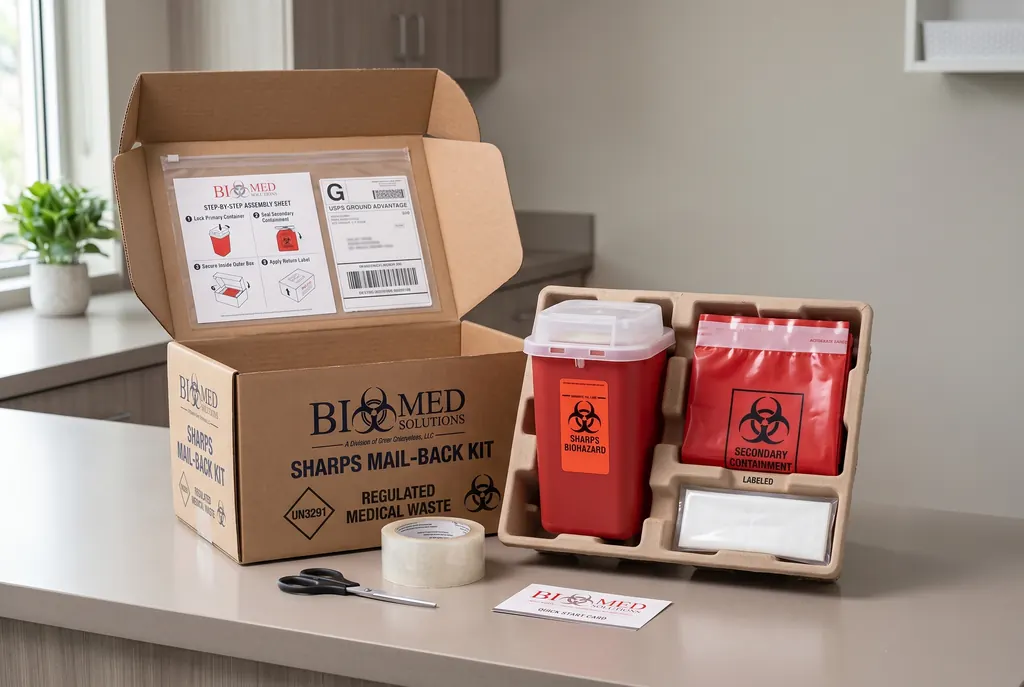
Prepaid return boxes to all 50 states, for offices that make very little.
What a walk-in clinic generates
Small rooms, unpredictable days
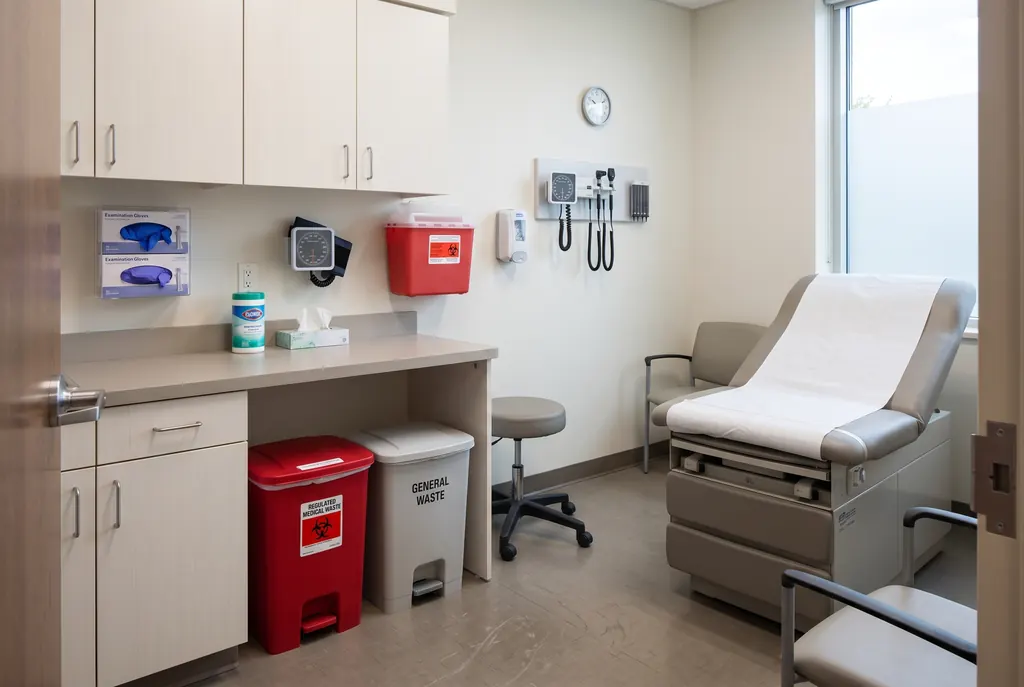
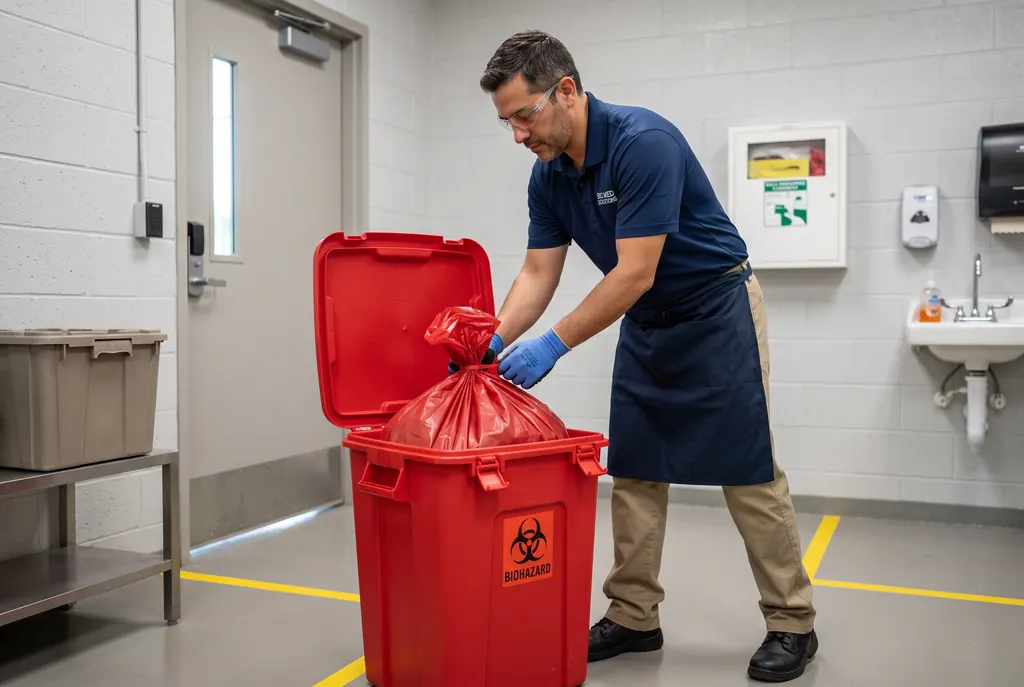
Most urgent care waste comes from two procedures: suturing and injecting. Between them they fill sharps containers with suture needles, blades and syringes, and red bags with dressings and gloves. Neither is high volume on its own. Together, across a weekend, they overrun a container that was sized for an average week.
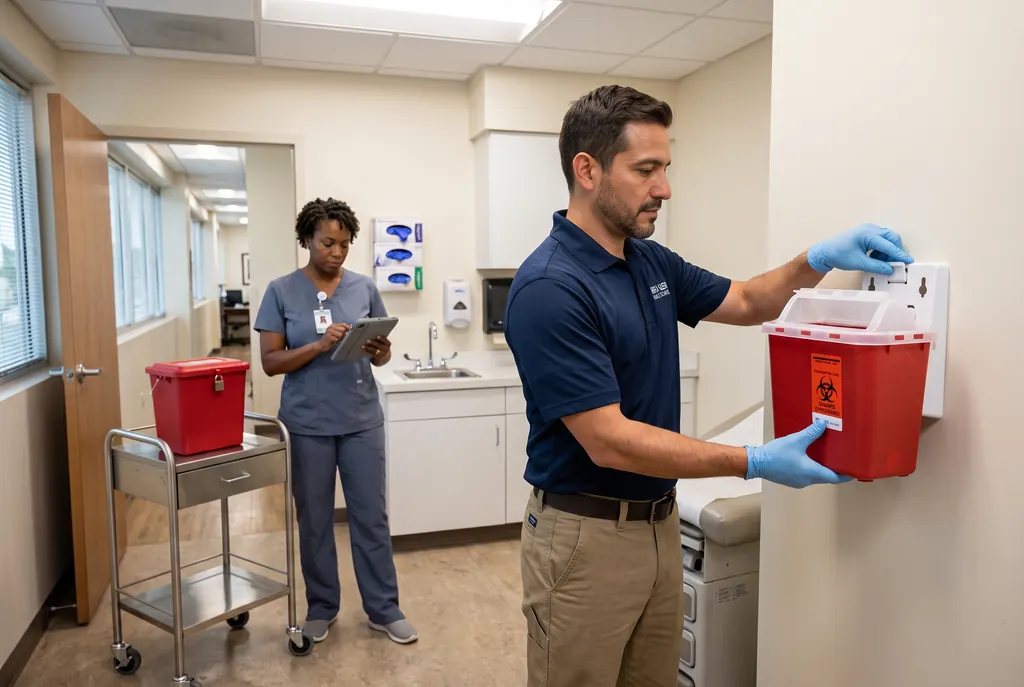
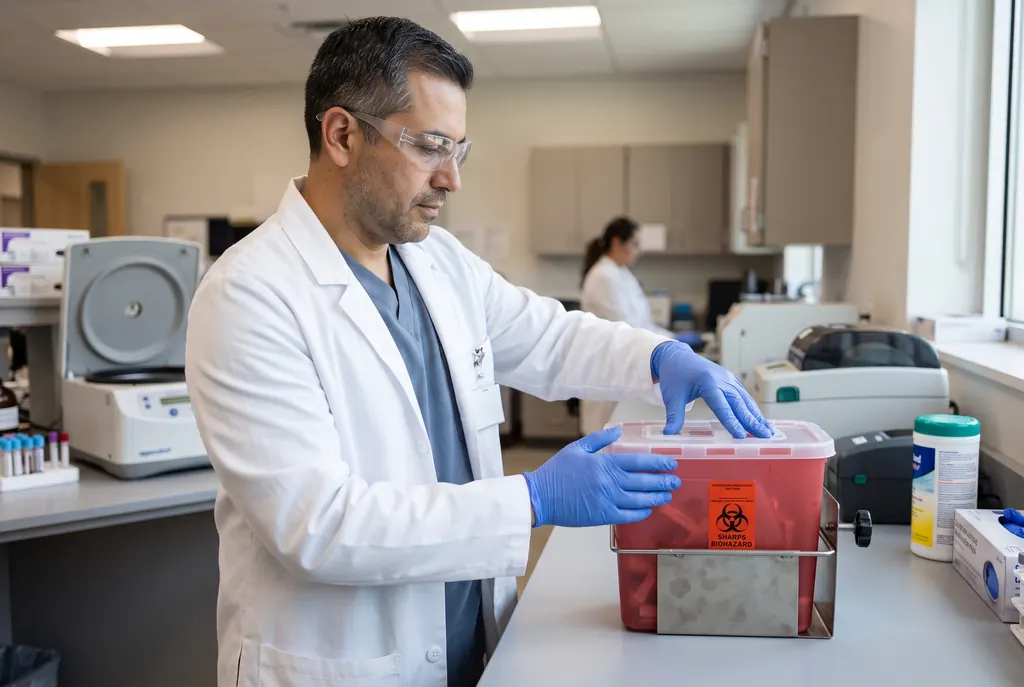
We size the containers for your busiest day rather than your average one, and put them where the clinician already stands, so nothing gets carried down a corridor with a needle in it.
Suture and procedure sharps Needles, blades and staples from laceration repair and minor procedures.
Injection waste Syringes and vials from immunizations, steroid and antibiotic injections.
Red bag waste Blood-soaked gauze, dressings and contaminated gloves and gowns.
Rapid test waste Contaminated swabs and cassettes from point-of-care testing.
What applies to you
The rules behind the containers
A walk-in clinic answers to the same bloodborne pathogens rule as a hospital. The paperwork is lighter; the standard is not.
Exposure control plan
OSHA 29 CFR 1910.1030 requires a written plan, reviewed annually, covering every employee with reasonably anticipated exposure to blood.
Containers at the point of use
Sharps containers must be puncture resistant, labeled or color coded, and placed as close as practical to where the sharps are used.
Do not let it sit
Florida caps on-site storage of biomedical waste at 30 days. Alabama works to ADEM's Division 335-17. Either way, storage time is part of the schedule.
Proof it left legally
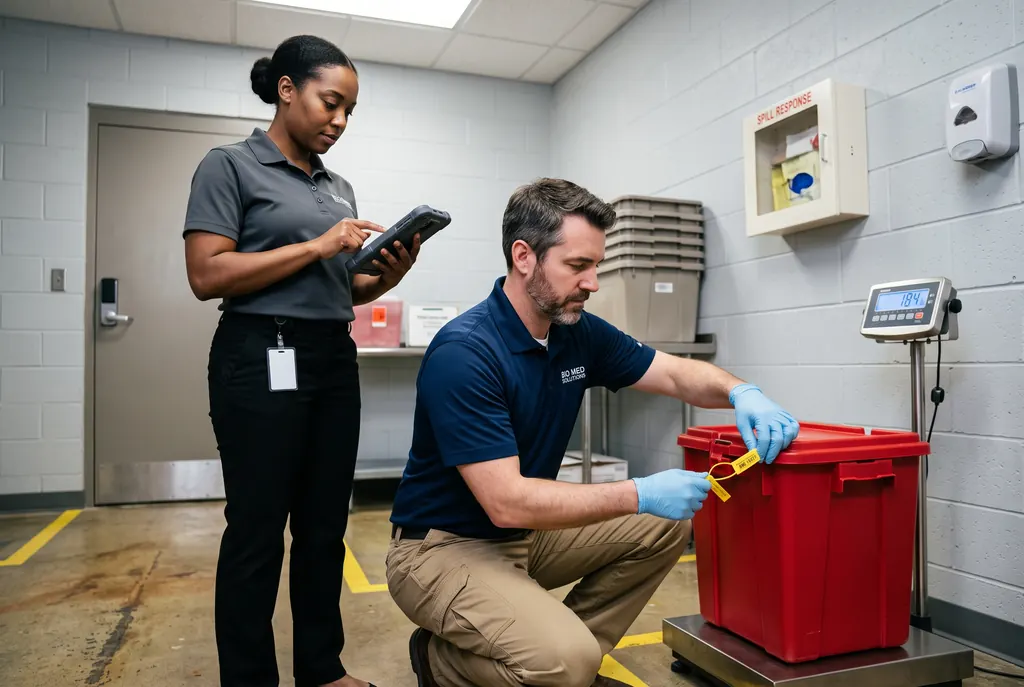
A manifest and proof of destruction are what turn "we have a hauler" into an answer an inspector accepts.
A summary for orientation, not legal advice. Check the current rule with the agency, or call the office in Mobile, AL.
Two ways to dispose
Pickup or mail-back
It comes down to how much you make. Steady volume suits a truck on a schedule. An office that fills a few containers a month can skip the truck and mail them back.
Scheduled pickup
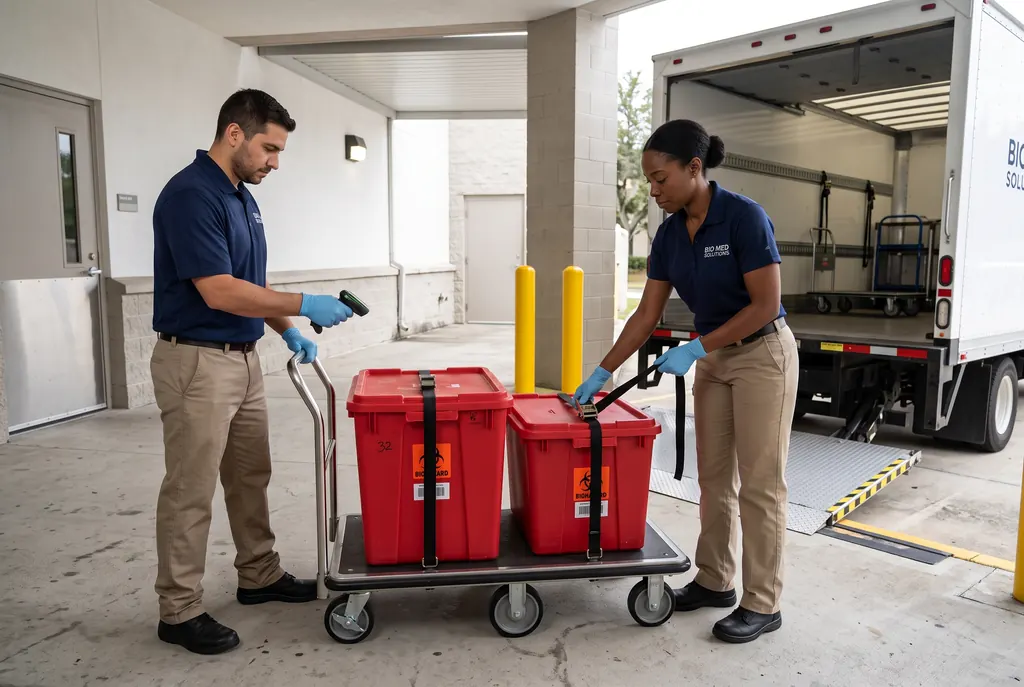
For clinics, practices and facilities with steady volume
Containers and bags supplied for each waste stream
Routine or flexible pickups, adjusted when your volume changes
Collected by trained, experienced personnel
Waste manifest and proof of legal destruction every time
Local across South Alabama, South Mississippi and the Florida Panhandle, from our Mobile, AL office
It depends on how much you generate. Most walk-in clinics settle into a routine interval, and we change it when the season or the patient volume changes.
What do we do when a weekend overruns the containers?
Tell us and we adjust the schedule or the container size. That is the usual fix, and it does not cost you a renegotiated contract.
Can a small clinic use mail-back instead of pickup?
Yes, if you generate 0 to 50 lbs a month. Systems run from 1 quart to 28 gallons, ship anywhere in the US, and come back on a prepaid label with a certificate of disposal.
Do you supply the containers?
Yes. The containers and the bags your waste is collected in come with the service.
Do you serve clinics outside Alabama and Florida?
Local pickup covers South Alabama, South Mississippi and the Florida Panhandle. Anywhere else in the country, mail-back does the job.