Medical waste disposal for nursing homes and assisted living
A nursing home is a residence and a clinical facility at the same time. Insulin is given in bedrooms, dressings are changed on a corridor round, and the waste has to be collected without turning a home into a hospital.
Get a quote today
Tell us about your facility and the Mobile office will call you back.
No long-term contracts
You stay because the pickups happen, not because a contract says so.
No hidden fees
Mail-back has no minimum purchase and no fuel surcharge either.
Local pickup
South Alabama, South Mississippi and the Florida Panhandle.
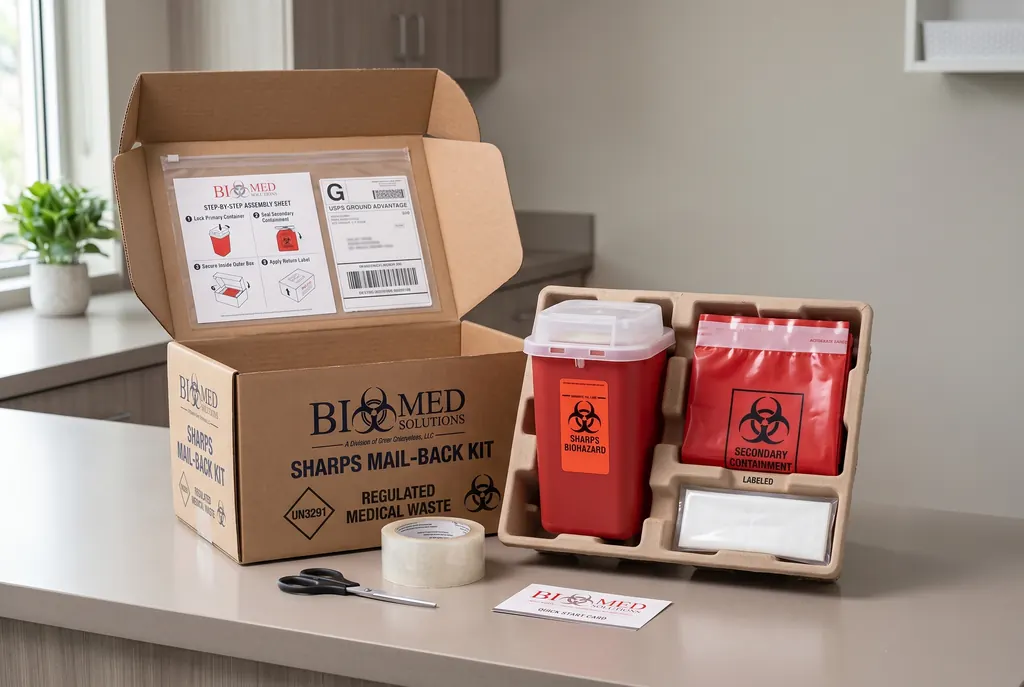
Mail-back anywhere
Prepaid return boxes to all 50 states, for offices that make very little.
What a facility generates
Steady, and spread across the building
Insulin is the backbone of the stream. A hundred-bed facility with a high diabetic population fills sharps containers on a rhythm you can set a calendar by, and it happens on every wing at once rather than in one treatment room.
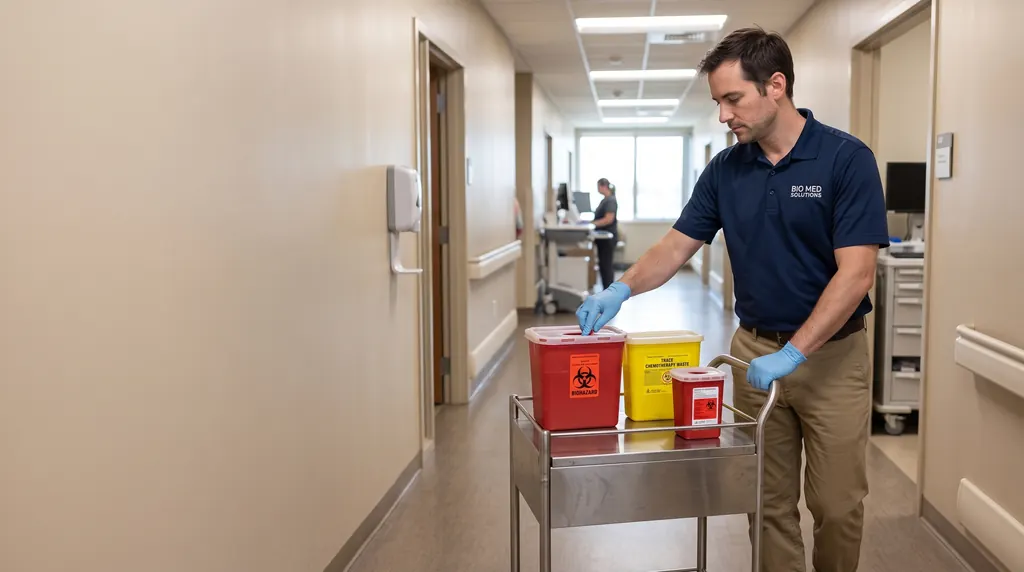
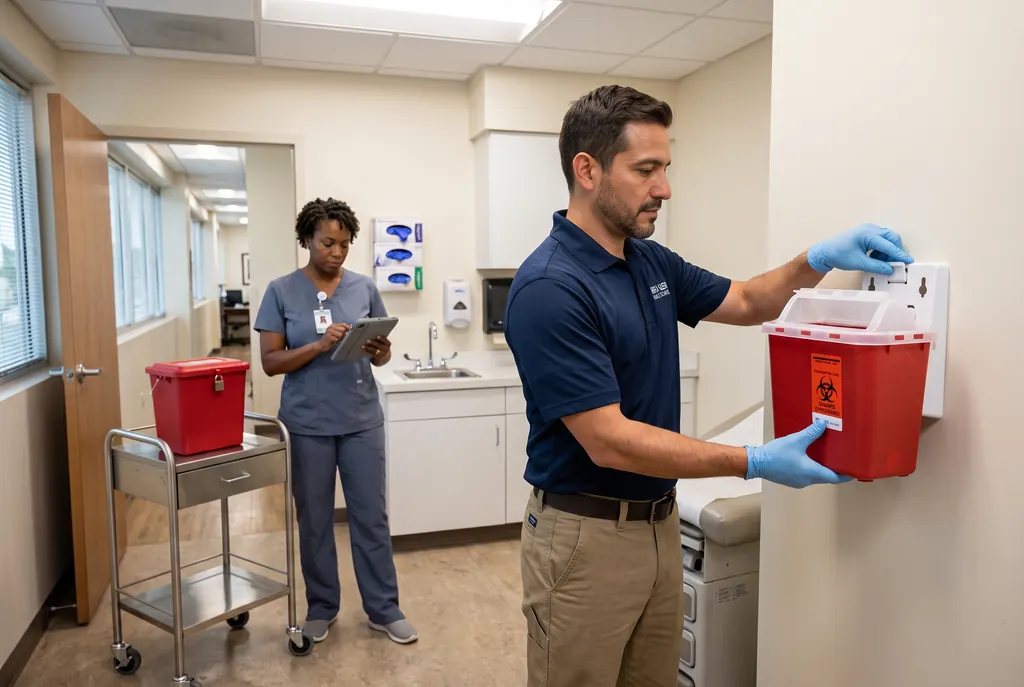
Wound care adds weight: pressure injury dressings, saturated gauze and contaminated PPE. Container placement matters more than container size here, because a nurse should not be walking a used needle past a resident's door.
Insulin and injection sharps The largest single stream in most facilities, generated on every wing.
Wound care waste Pressure injury and ulcer dressings, saturated gauze and contaminated PPE.
Incontinence and isolation waste Material from residents on contact precautions, where it meets the regulated definition.
Medication waste Expired and unused non-controlled drugs from the medication room.
What applies to you
The rules behind the containers
Long-term care answers to state survey and to OSHA, and waste handling shows up in both.
Bloodborne pathogens
OSHA 29 CFR 1910.1030 covers every employee with reasonably anticipated exposure, including nursing assistants.
Containers on the round
Point-of-use containers on the medication cart and on each wing, so used sharps never travel.
Controlled drugs are separate
Destruction of DEA-scheduled medication runs under 21 CFR 1317 through a registered route. It is not part of this service.
Survey-ready records
A manifest and proof of destruction per pickup, filed with your infection control documentation.
A summary for orientation, not legal advice. Check the current rule with the agency, or call the office in Mobile, AL.
Two ways to dispose
Pickup or mail-back
It comes down to how much you make. Steady volume suits a truck on a schedule. An office that fills a few containers a month can skip the truck and mail them back.
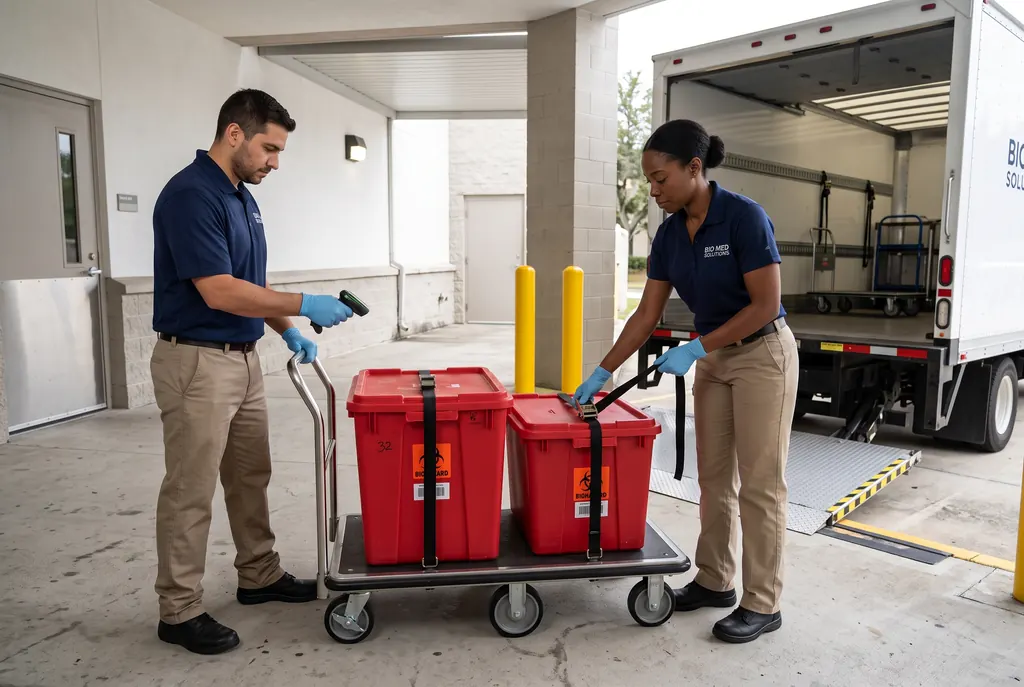
Scheduled pickup
For clinics, practices and facilities with steady volume
Containers and bags supplied for each waste stream
Routine or flexible pickups, adjusted when your volume changes
Collected by trained, experienced personnel
Waste manifest and proof of legal destruction every time
Local across South Alabama, South Mississippi and the Florida Panhandle, from our Mobile, AL office
Enough that a used needle never leaves the room or the cart it was used at. That usually means containers on medication carts plus fixed points on each wing.
Do you take controlled substances from the med room?
No. Destruction of DEA-scheduled medication runs through a registered reverse distribution route under 21 CFR 1317. We collect non-controlled pharmaceutical waste.
Can you handle isolation waste?
Regulated medical waste from residents on precautions is collected in the containers we supply. Ordinary incontinence waste that does not meet the regulated definition is general waste.
What documentation do we keep for survey?
A waste manifest for every pickup and proof of legal waste destruction.