An ambulatory surgery center turns over a room several times a day, and every turnover produces waste on a timer. The bin has to be emptied before the next case, which makes container placement and pickup interval an operational question, not a housekeeping one.
Get a quote today
Tell us about your facility and the Mobile office will call you back.
No long-term contracts
You stay because the pickups happen, not because a contract says so.
No hidden fees
Mail-back has no minimum purchase and no fuel surcharge either.
Local pickup
South Alabama, South Mississippi and the Florida Panhandle.
Mail-back anywhere
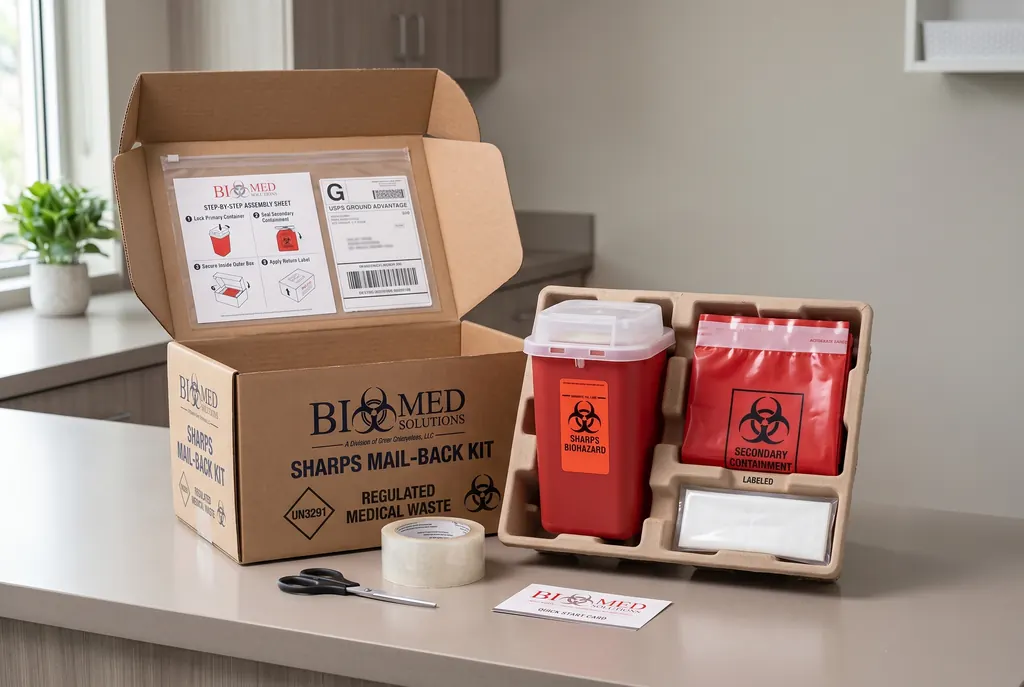
Prepaid return boxes to all 50 states, for offices that make very little.
What an ASC generates
Waste on the turnover clock
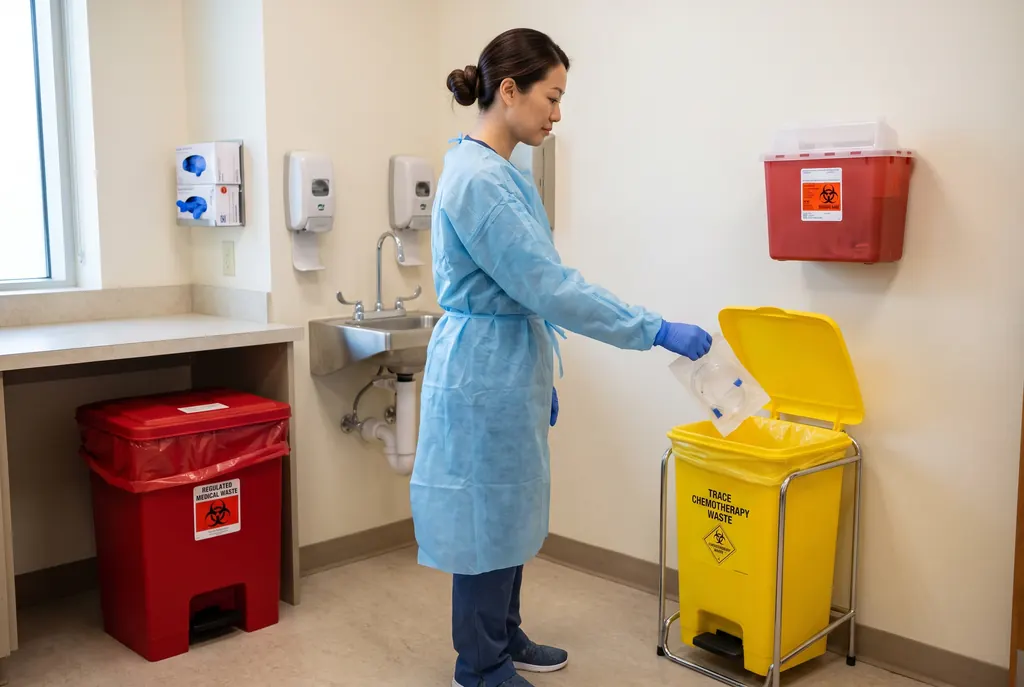
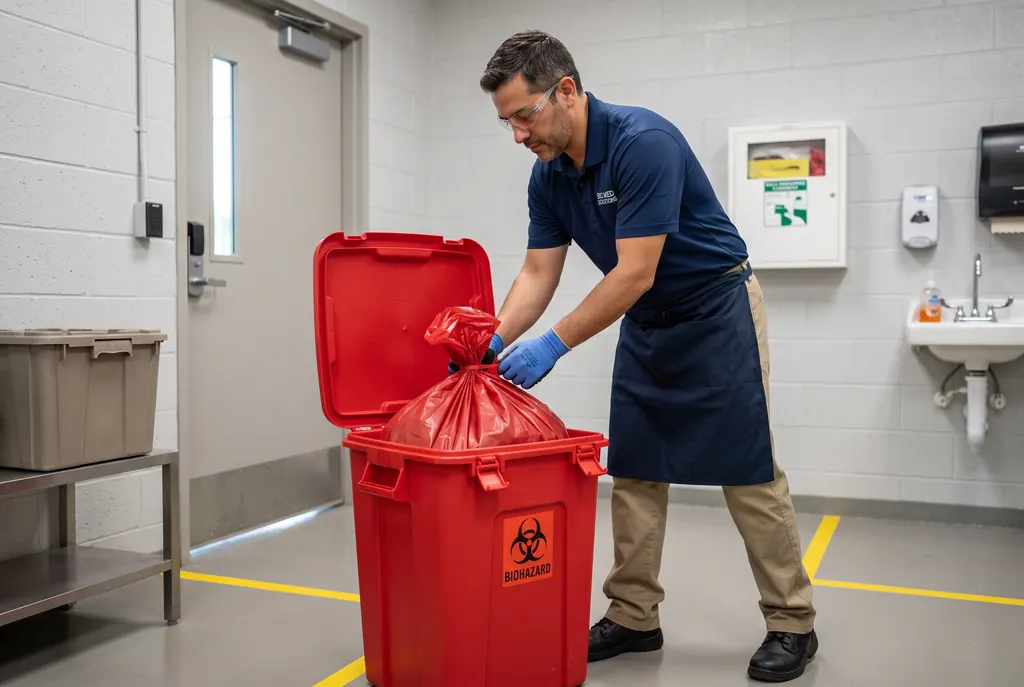
Surgical waste arrives in concentrated bursts. A case ends, the room is stripped, and drapes, suction canisters, gloves, gowns and a full sharps container all leave at once. The room has to be clean for the next patient, so there is no waiting for a convenient moment.
We set up per suite rather than per building: the right container in each room, a holding point that does not block a corridor, and a collection interval built around how many cases you run, not how big the building is.
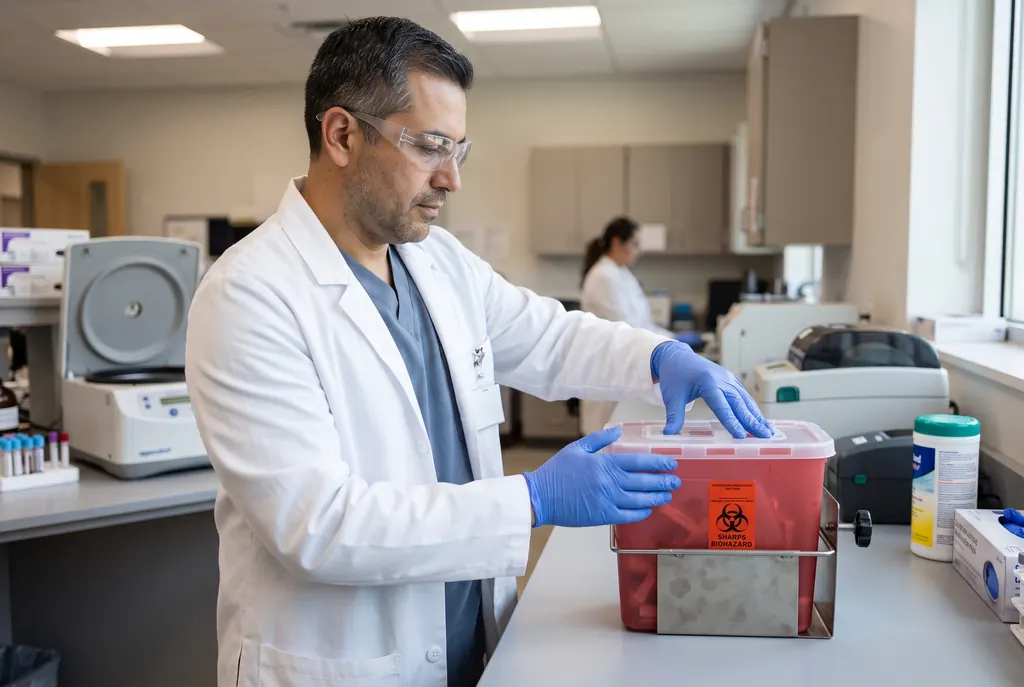
Procedure sharps Scalpel blades, suture needles and hypodermics from every case.
Red bag waste Drapes, gowns, gloves and dressings saturated with blood or other potentially infectious material.
Suction and fluid waste Canisters and tubing handled as regulated waste, not as general trash.
Anesthesia leftovers Expired and unused drugs, including those the EPA classes as hazardous pharmaceuticals.
What applies to you
The rules behind the containers
Accreditation surveys and state licensure both ask how waste leaves the building. These are the rules behind that question.
Bloodborne pathogens
OSHA 29 CFR 1910.1030 covers containers, labeling, PPE and the annual review of safer devices.
Packed for transport
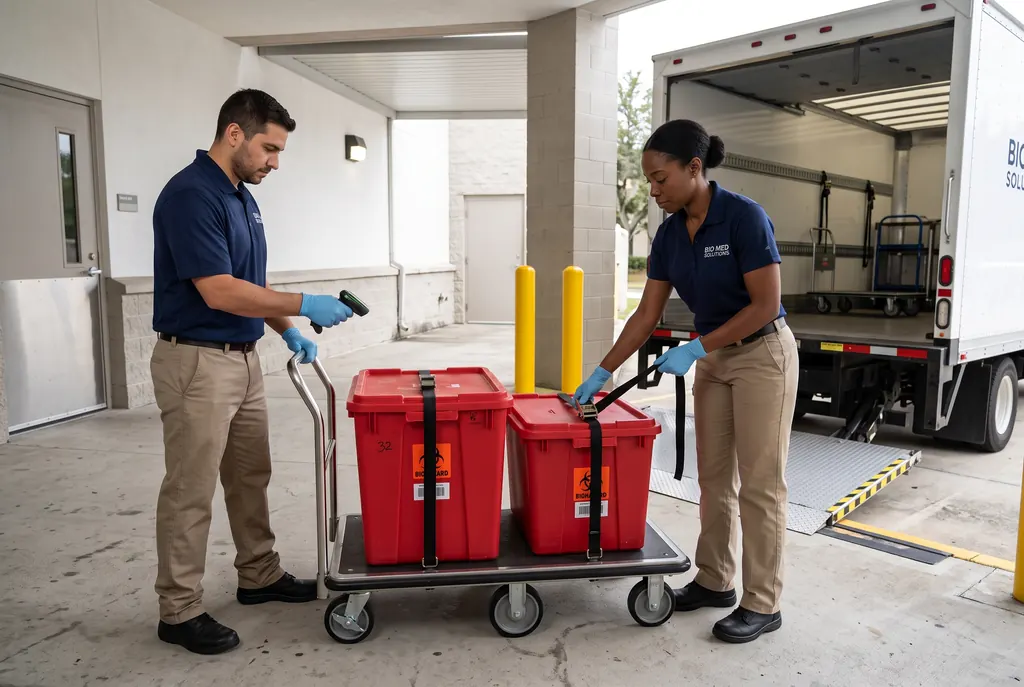
Regulated medical waste moves under DOT rules, 49 CFR, which is why it leaves in closed, marked packaging.
Storage has a limit
Florida allows 30 days on site. Alabama works to ADEM Division 335-17. Turnover volume makes both easy to hit if the interval is wrong.
Chain of paper
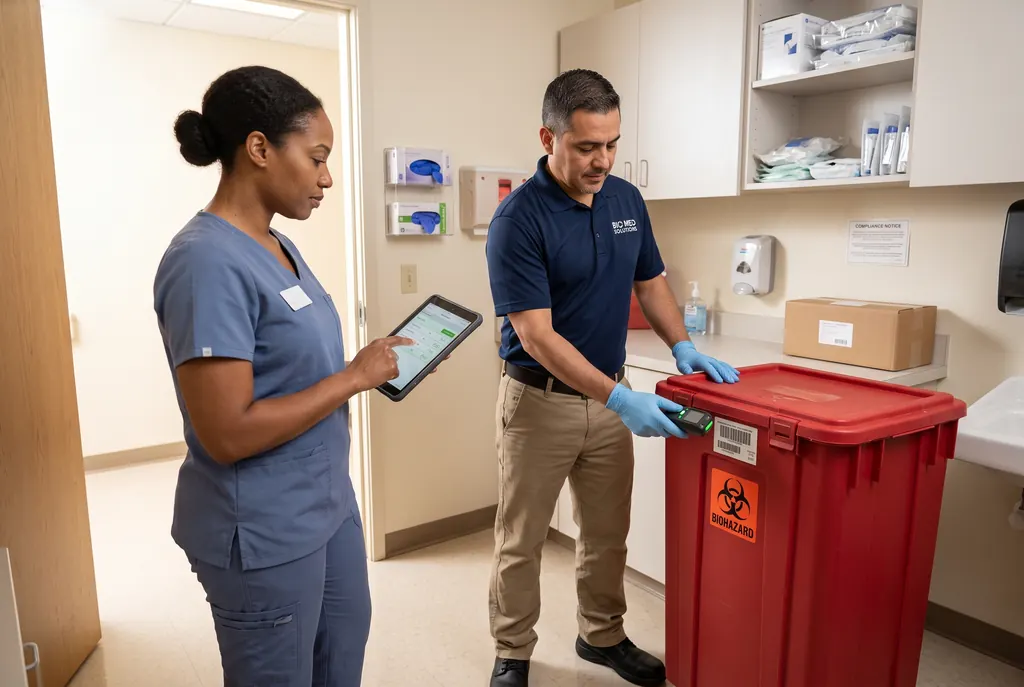
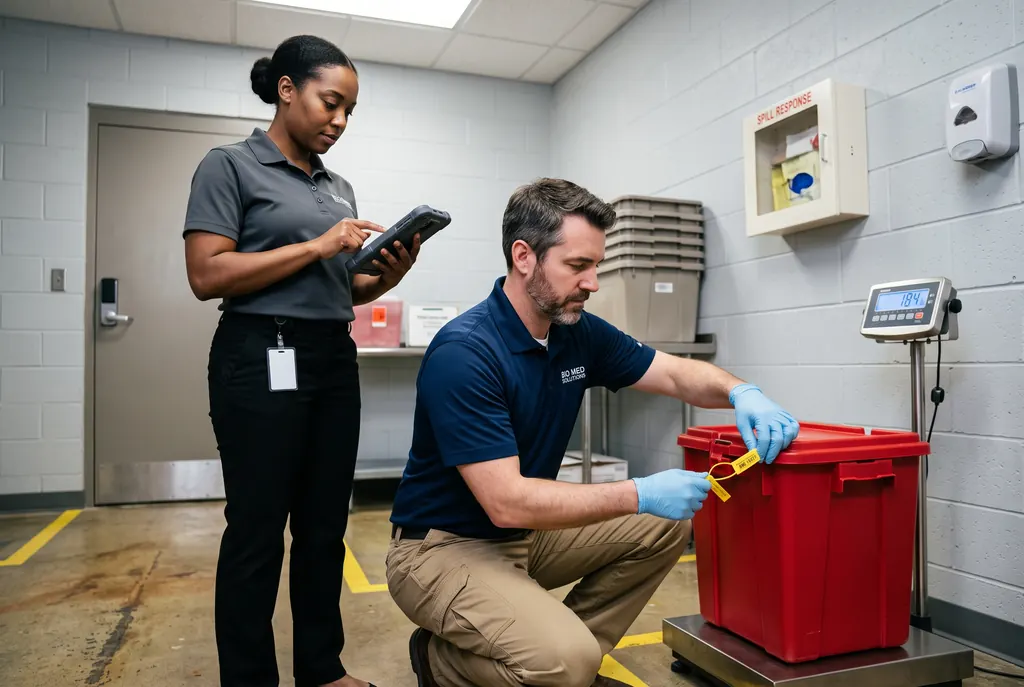
A manifest for each pickup and proof of legal destruction, which is what a surveyor asks to see.
A summary for orientation, not legal advice. Check the current rule with the agency, or call the office in Mobile, AL.
Two ways to dispose
Pickup or mail-back
It comes down to how much you make. Steady volume suits a truck on a schedule. An office that fills a few containers a month can skip the truck and mail them back.
Scheduled pickup
For clinics, practices and facilities with steady volume
Containers and bags supplied for each waste stream
Routine or flexible pickups, adjusted when your volume changes
Collected by trained, experienced personnel
Waste manifest and proof of legal destruction every time
Local across South Alabama, South Mississippi and the Florida Panhandle, from our Mobile, AL office
Can you collect often enough for a full surgical schedule?
Yes. Collection runs routinely or flexibly, and the interval is set from your case volume. When the block schedule changes, the interval changes.
Do you handle pathological or anatomical waste?
No. BioMed collects regulated medical and red bag waste, sharps, and pharmaceutical waste. Pathological, anatomical, chemotherapy and chemical streams need a vendor set up for them.
What about expired anesthetics and other drugs?
Pharmaceutical waste disposal is one of our services, including EPA hazardous pharmaceutical waste, with characterization, inventory and the right containers.
What documentation follows each pickup?
A waste manifest and proof of legal waste destruction, for your records and for a survey.
Where does BioMed collect?
Local pickup covers South Alabama, South Mississippi and the Florida Panhandle, run from our office in Mobile, AL.